


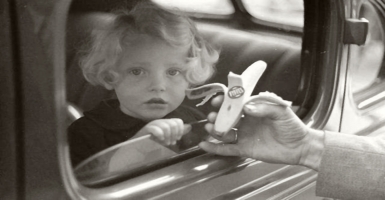
I am currently researching on the history of bananas in Norway. This lead to know a bit more on the history of labels for bananas. In this page ill share a bit of information about, trying to focus just on information related to labels for bananas. However, some historical information will also be shared to give some context. If any of you have some information about, feel free to contact me, to enrich the research. thanks !
Felipe
It is not known for certain when the first banana was seen in Norway, but in December 1825, Morgenbladet reported that a banana plant (Musa paradisiaca) bloomed for the first time at the Botanical Garden on Tøyen. This suggests the first bananas may have been harvested in Norway during spring 1826. The earliest record we found of a banana in the local market is from ten years later, when Trondhjems Avis supplement notes that bananas were sold in a store alongside apples.
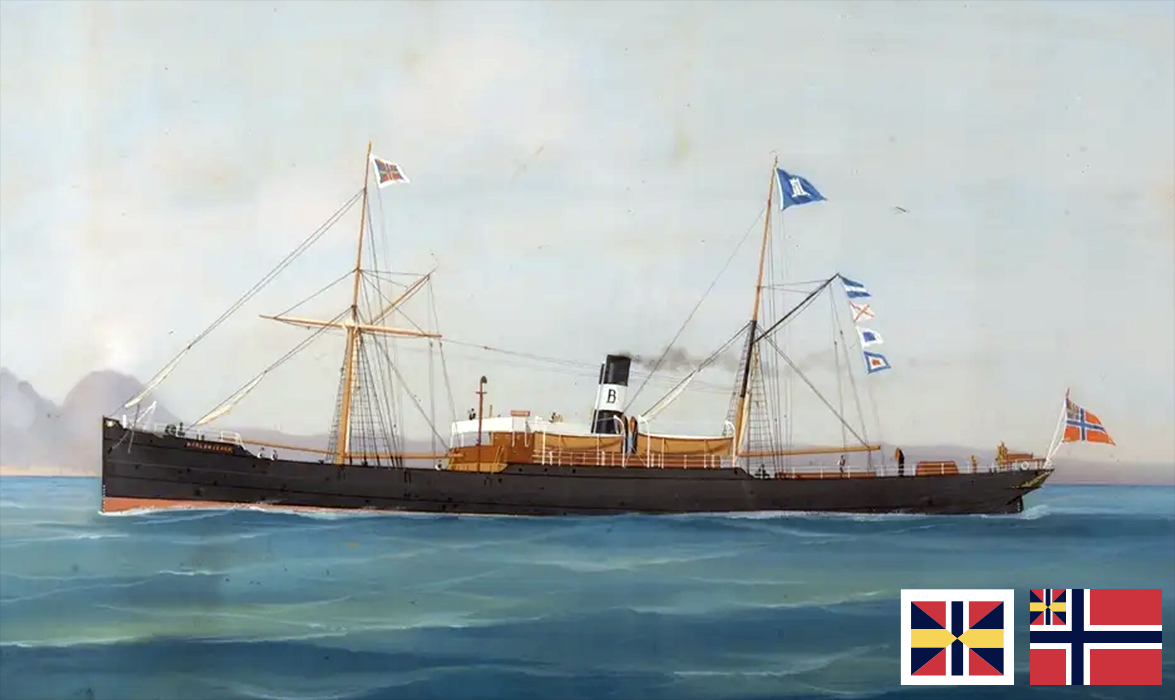
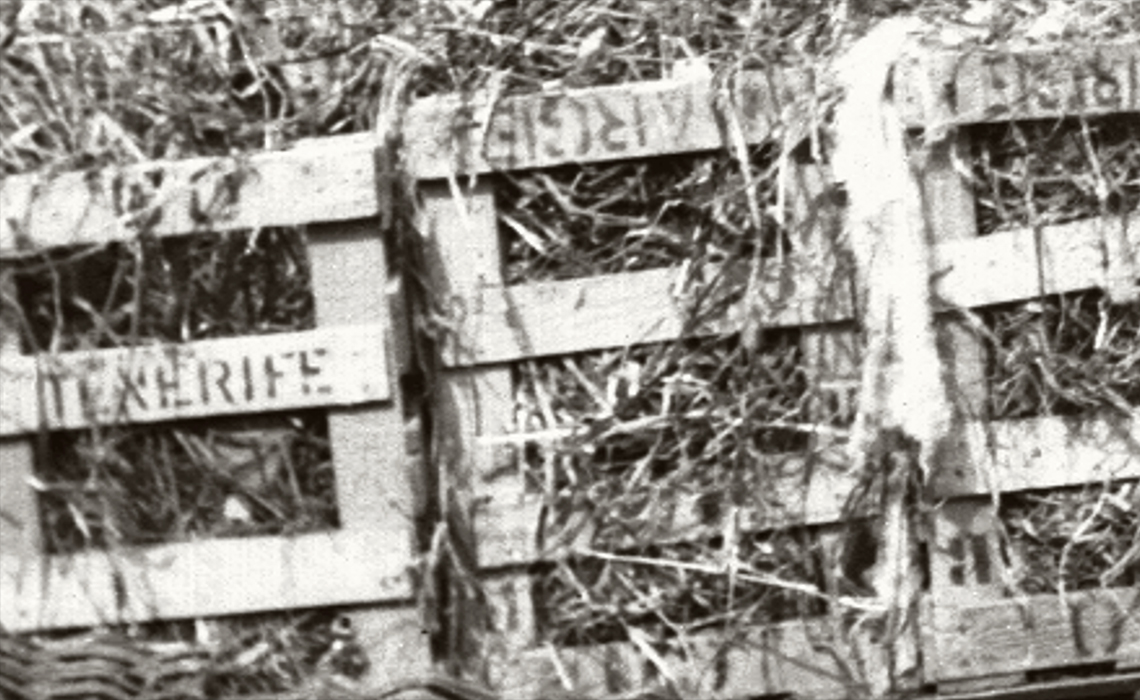
Norwegians played a key role in the early banana trade, with the majority of the fleet and crew transporting fruit from the Caribbean to the United States under the Norwegian ensign. These steamships rapidly evolved and later also carried wealthy tourists to the islands, earning the popular nickname ‘banana boats.’ Even the wooden Canary crates used in the early years of banana exports to the United Kingdom were made from Norwegian timber.
Throughout the nineteenth century, Norwegian articles on banana plants reproduced the European discourse of civilizational hierarchies: ‘The same piece of land which, when sown with wheat, provides food for one person, when planted with plantains or bananas, can support a numerous family; but the very fact that such insignificant work is required for this is one of the most important reasons why the inhabitants of the tropics generally rise so little above the lowest point. On the other hand, we owe our entire culture and our social life to the circumstance that we have to cultivate our soil by the sweat of our brow, and we should therefore consider ourselves fortunate that it does not produce any plantains.” (Naturen. Kristiania, 1879; see Das Ausland, 1832; Skilling Magazine 1842, etc.)
1880 >
In the 1880s, bananas were regularly advertised in Norwegian newspapers (Morgenbladet, 28 June 1881) and quickly gained a reputation among the elite as an exotic, expensive dessert. Conservative voices defended this exclusivity: “Bananas must now and always be regarded as a luxury item” (P. A. Morell, Høyre, 1905). However, as the fruit's popularity grew among the working classes in the United States and the United Kingdom—and as people became more aware of its nutritional value, pleasant taste, and affordability—Norwegian power circles, well aware of the scale of the banana trade and Norway's involvement through shipping and timber, began to see a clear opportunity.
"When one considers that nearly 30 million bundles of bananas are consumed annually, and each bundle contains about 50 bananas, one can form a rough idea of the enormous forms this fruit business takes. To bring these bananas to the States from Central America, Jamaica, Cuba, and San Domingo, a company, the so-called United Fruit Co., employs 50 steamers (…). Most of these vessels are Norwegian (…) circa 1 million Kroner per month in fixed expenses for those ships" (W.N. Bergens Tidende, 1900)
“The richest food in the world is the banana. It is widespread throughout the hot zone, all around the globe and in large parts of the temperate zone. The Negroes in America use it to a large extent as food, and so do the natives of the South Sea islands. But it is eaten mostly among the working classes in the United States of America. The fruit has the advantage that it can be eaten raw, boiled, fried, and dried. (…) This fruit trade bring us a lot of money every year.” (Næss, Lister og Mandals Amtstidende og Adresseavis, 26 July 1902)
In 1902 United Fruit Co. began using oil as fuel for its steamships reducing dramatically their operative costs and crew. (Norges Sjøfartstidende, 24 april 1902) and also made a deal with the British company Elder, Dempster & Co. for exports between Jamaica and England. In that year, "The capital invested [in Norwegian ships for the banana trade was approximately] 15,000,000 Kroner, giving a dividend to the shareholders of at least 3,000,000 Kroner per year. From this one will therefore be able to form an opinion of what a large and lucrative business Mr. Joachim Grieg, through his connections in America, has managed to create for the Norwegian shipping industry over the years." (Tvedestrandsposten, 18 June 1902)
In 1903, Venstre parliament member and shipowner Bernard Hannsen entered the lucrative business of banana trade, naming the first of several steamships for the trade Bellita, after the daughter of the UFC owner, who chartered the ship for several years.
In July 1905, the Norwegian Parliament approved a reduced tariff on bananas (from 12 to 5 øre), proposed by the very same Bernard Hannsen, assuring that bananas would not compete with local fruits like apples and pears but would provide a healthy, affordable option for lower-income families: “folk, som har mindre raad, her faa en sund, god og nærende frugt i sommertiden.”
“people with fewer means may here obtain a healthy, good, and nourishing fruit in summertime”
With the stated governmental aim of making bananas the “food of the people” (Th. B. Olsen Heistein, ship-broker, Venstre parliament member, 1905), the first large-scale banana import arrived to Norway in September 1905, coinciding with its formal withdrawal from the union with Sweden and making Norway the first country in continental Europe to import bananas for a wider market. The three tons shipment was arranged by businessman Christian Marius Emil Matthiessen in partnership with his former crate-timber clients—by then operating as Elders & Fyffes Ltd.—who held exclusive import rights for Europe, securing Chr. Matthiessen AS (1886, 1902) sole access to the Norwegian and Scandinavian markets.
In the media, the introduction of bananas into Norwegian everyday life was promptly highlighted as a sign of support for the Parliament and for therefore the independent nation: “Jeg besluttede mig til at stotte Stortinget. I mit Hjem skulde Bananen bli et Folkenæringsmiddel” (Bergens Annonce Tidende, 23 September 1905 ).
“I decided to support the Norwegian Parliament. In my home, the banana should become a national daily food staple”
Despite high resale prices maintained by conservative merchants, challenges in ripening, and public unfamiliarity, nothing hindered the fruit’s integration into Norwegian culture. By the end of 1905, fifty-seven tons had arrived, and the “delicacy and nourishing food for the common man” (Morgenbladet, 1905) was even promoted for Christmas decorations.
Bananas soon became an inadvertent symbol of national living standards. Great properties were attributed to its consumption by doctors, such as good against diarrhea (Hjemmet Nr.38, 1908) ; and even traditionalists and temperance advocates endorsed their consumption as a means of reducing the intake of alcohol, sweets, and coffee.
1911 >
“Bananen, denne nærende og velsmagende Frugt, holder nu paa at bli den Folkespise, den fortjener at være ogsaa her hjemme.” (Lister og Mandals Amtstidende og Adresseavis, 1911)
The banana, this nourishing and flavoursome fruit, is now becoming the people’s food it deserves to be here in Norway.
The use of Norwegian vessels for the trade reached its peak in 1911, with no fewer than 67 ships chartered by the UFC alone (Grieg, 1930). Their steadily growing fleet was known and marketed as the "Great White Fleet," named for the ships’ heat-reflecting white color. This name was later adopted by the US Navy fleet following its 1907 global voyage, which showcased the strength of the Theodore Roosevelt administration. The policies of the UFC and the US government became a dead ringer for each other, exemplified by the ousting of the president of Honduras in 1911.
>The banana trade was, from its origins, a profitable endeavor, involving hundreds of Norwegians in various roles. One such individual was Johan Elligers, a captain from Arendal who served as vice president of the Amalgamated Paint Company, a major supplier of paint for both "Great White Fleets". It is known that he married in 1905 and had three children, the eldest of whom was a student at Harvard. Yet, little is known about the extent of Norwegian participation and official posture in U.S. interventionism in the Caribbean.
1914 >
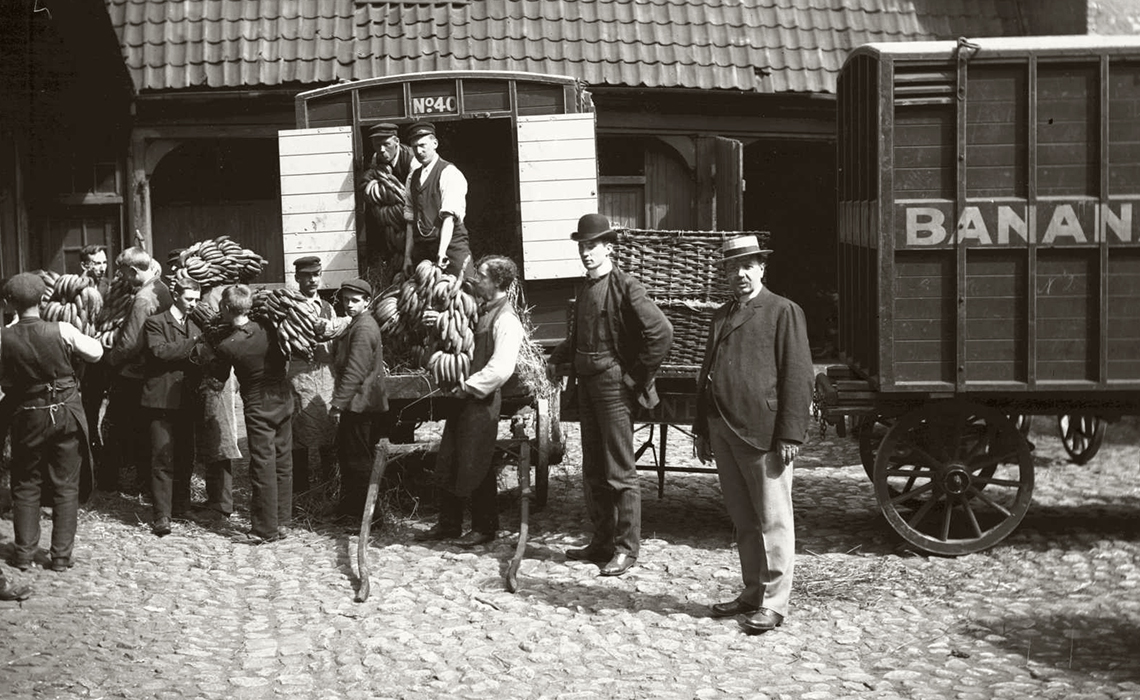
By 1914, 1,430 tons of bananas were handled through facilities in Kristiania (reverted to Oslo in 1925), Bergen, Stavanger, Trondhjem, Kristiansand, Arendal, and Skien. Through rapid expansion, inventive public campaigns, frequent advertorials, and wagons marked BANANAS MATTHIESSEN, Christian Matthiessen and his firma soon became known as Banan-Matthiessen. In his later years, imports plummeted owing to the First World War.
1919>
Just before the National day of 1919, banana imports resumed and climbed steadily—from 2,500 tons in 1920 to 8,400 tons a decade later. Through the 1920s, price of bananas continue reducing and Norwegians consumed more bananas per person than any other nation. The presence of bananas in media and public space grew exponentially with all sorts of campaigns, shop-window competitions, a car shaped as a banana, and so on.
“Jamaica bananas are indispensable for athletes.”
–Otto von Porat (gold-medal boxer), 1928.
“This delicious and nutritious fruit has, so to speak, become part of the daily diet of Norwegians, at least among those living in the cities. (…) Several of our top athletes claim they can credit bananas for achieving such brilliant results in their sporting performance.” (Overn, 1929). In those years, race walker Notto Fipp stood out for his diet of only bananas and milk, earning him the nickname “Bananen” (“The Banana”).
“Jamaica Bananas” was the commercial name for early bulk imports of the cultivar Gros Michel, now nearly extinct, although they were not exclusively from Jamaica. Thanks to cloned monoculture, this cultivar spread rapidly across Caribbean countries, later nicknamed Banana Republics due to subjugation by US and British imperial interests through corporations such as United Fruit Co (UFC).
Norwegian media bowed “The United Fruit Company is without exaggeration one of the world's most remarkable enterprises. In the U. S. A. it is called ‘the biggest farmer in the world.’ Its civilizing efforts in the Central American republics are of vital importance to these states.” (Nidaros Lørdagsblader, 1927.09.17) By 1928, the UFC had chartered 25 Norwegian ships, while other companies chartered an additional 7. The number of companies involved in the Caribbean banana trade had also declined due to mergers, from around 70 in the early years to fewer than 10 by the end of the 1920s (United Fruit Company, Standard Fruit & Steamship Co., Atlantic Navigation Corp., ORR Fruit S/S Co., Guyamel Fruit Co., Vaccaro Bros., Tropical Fruit & Transportation Co., and American Fruit Co.) all of which increased their own fleets through diverse sources.
In February 1929, Norwegian King appointed vice president of UFC Willian Newsome as Knight of the Order of St Olav. Norges Handels og Sjofartstidende reported: “This award will bring joy to Norwegian shipping circles (…) It can also be safely said that no other American has done so much for Norwegian shipping as Mr. Newsome. Personally, Mr. Newsome is a man of great dignity, and always the most thorough and correct businessman, whose word stands unbreakably. He is immensely popular among Norwegian shipowners and captains.”
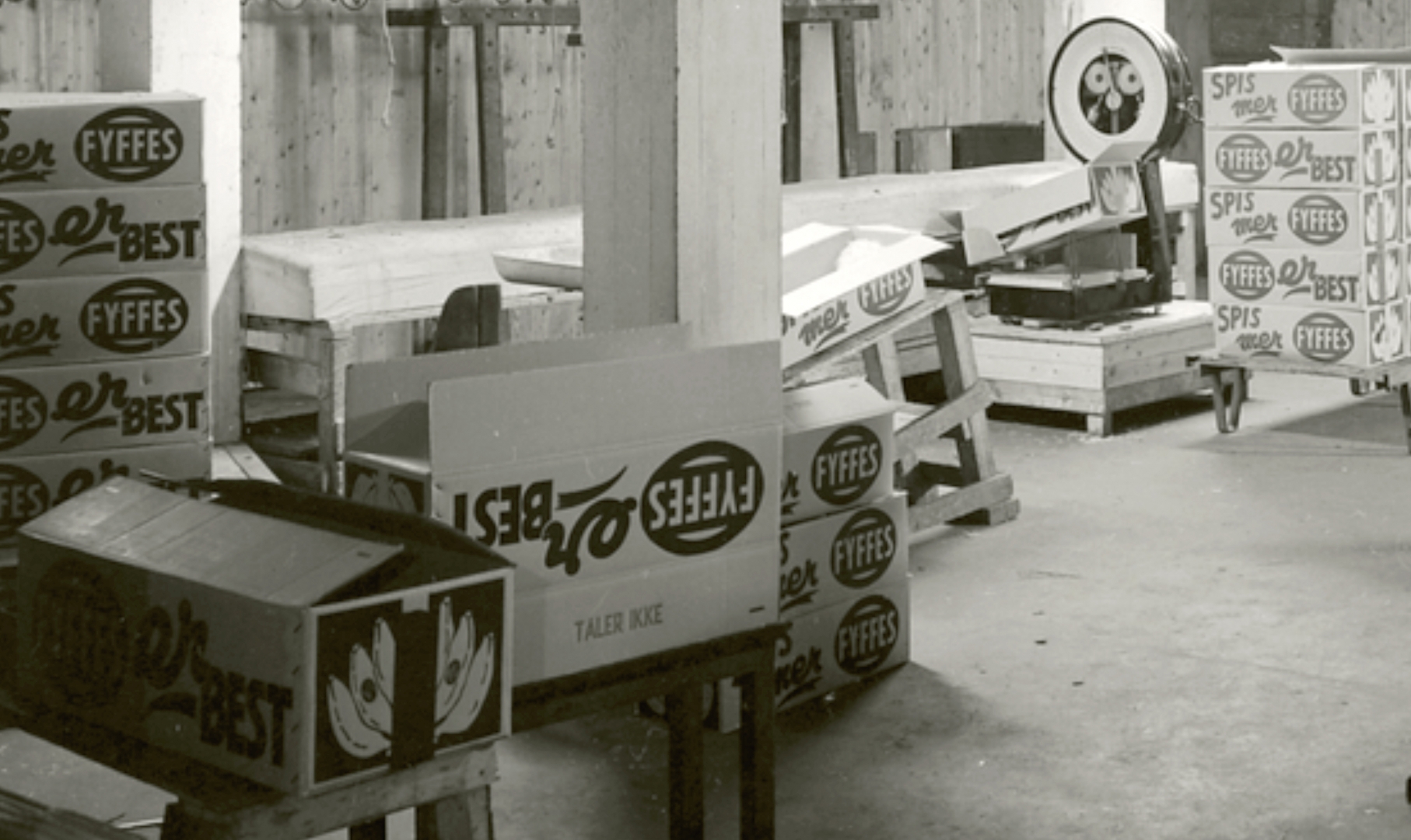
In late 1929, the British company Elders & Fyffes — controlled by the UFC since 1913 — introduced a small blue oval label bearing the brand name ‘FYFFES’ in white. This both renamed the bananas and marked them as a quality product. In Norway, the label was introduced immediately and promoted through various methods, including dropping leaflets from a plane, and it continued being associated to the best Norwegians in the world of sports. Newspaper reports also clarified that these were not new bananas, but the very same ones imported since the symbolic 1905 , now simply easier to recognise (Østlandsposten, 1929.10.16). This is the first known fruit label worldwide.
the article continues up to our days, if you want to read it full let me know.
as said i am working on this text and it will change im planning to include it in a self-managed publication. and after that ill publish it here fully.
—
any information and support is welcome: felipe@antipodes.cafe
—
     Norway |
RAW INFO / IMAGES
I attach here a few images that may be of your interest … they are in disorder, and I can share sources if needed.
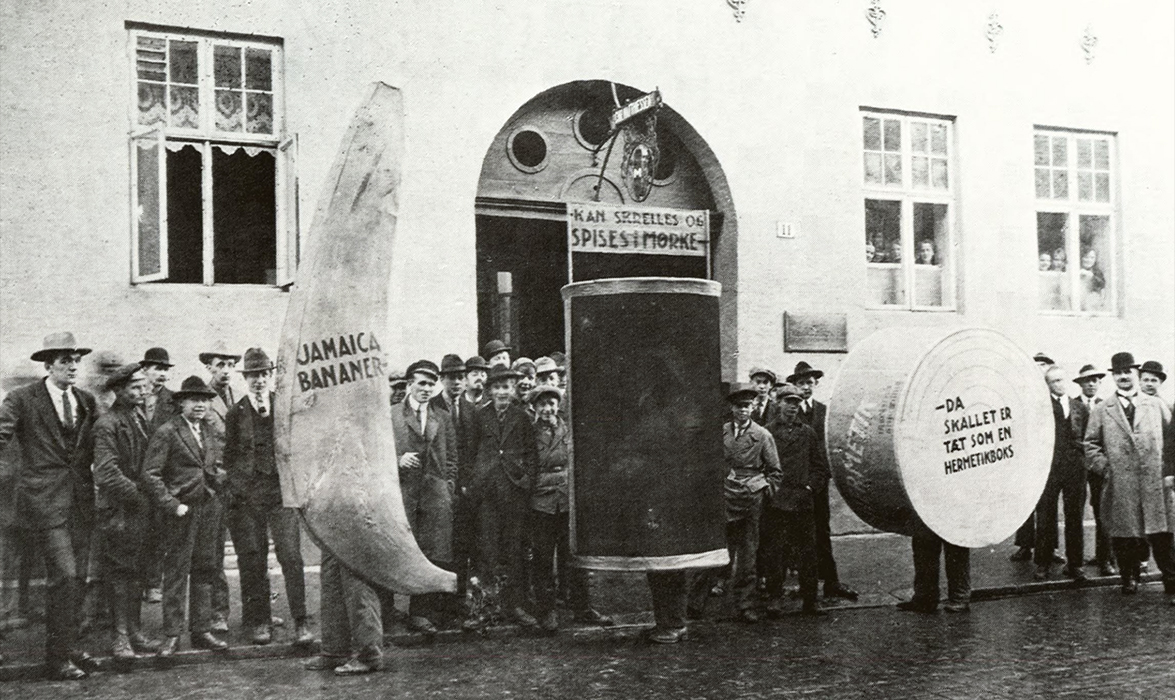
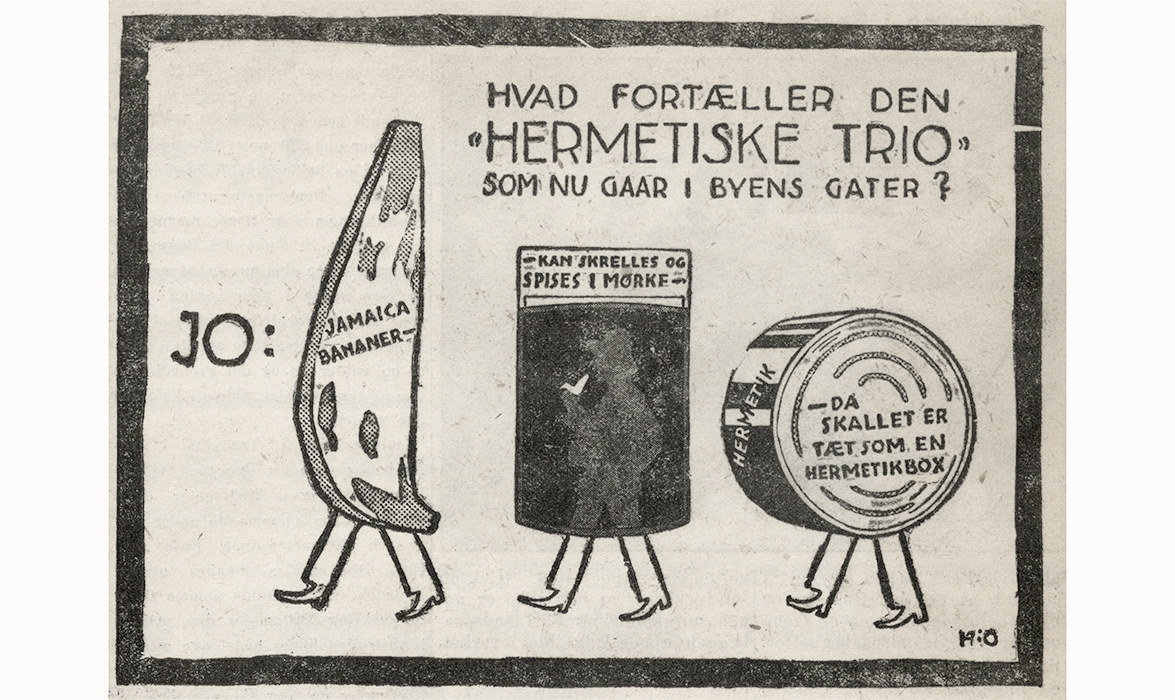
- A 1924 promotional activity without the label, but with the text on the banana, and a newspaper advertisement of that promo.
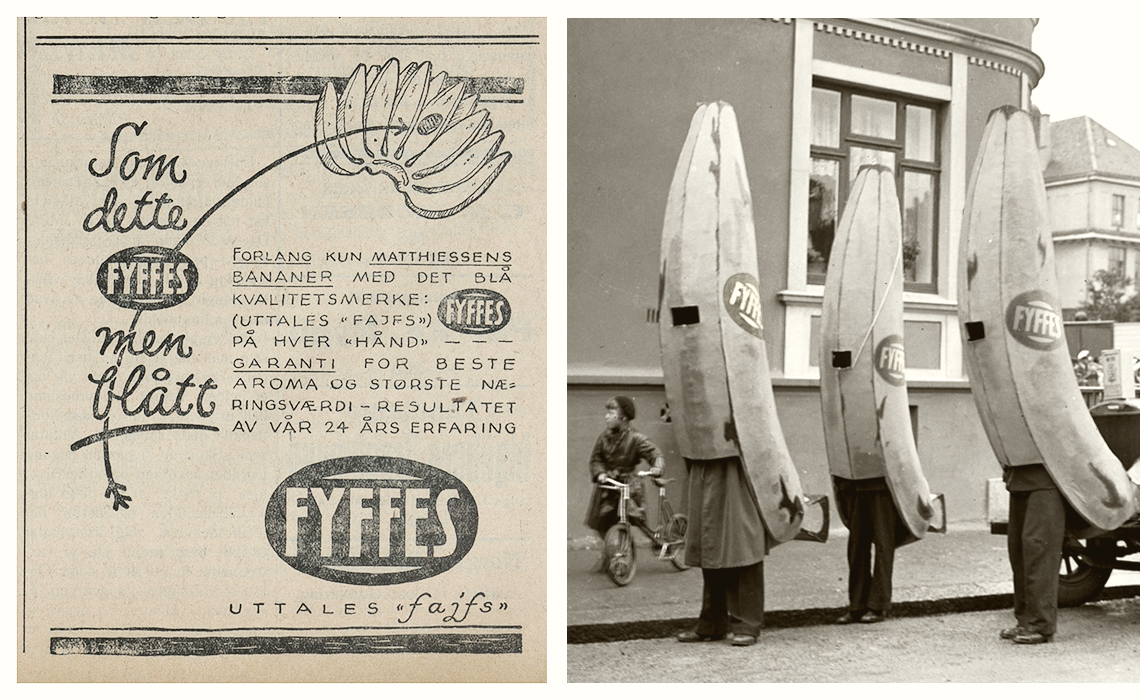
- One of the first advertisements of the first banana label FYFFES from 1929.
Banana labels from 1929 were not placed atop of every banana, but alternated in the hand of bananas: one with label, one without, and so on. - a promotional activity in public space by then featuring the new FYFFES labels .
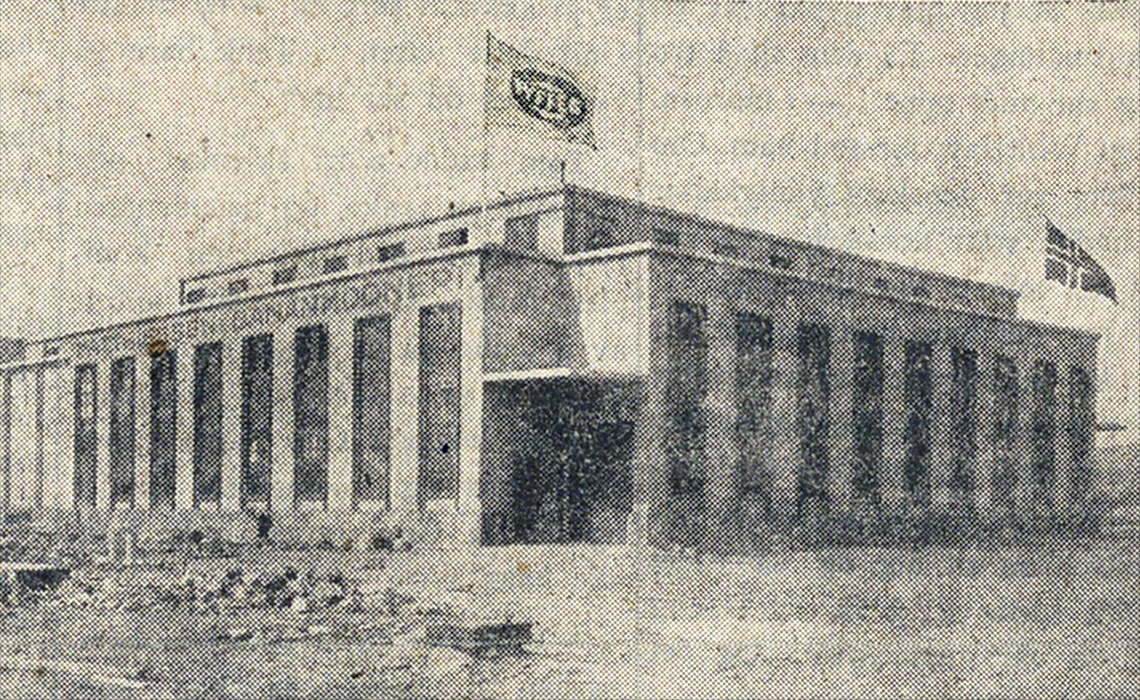
- a banana facility opened in 1930 with the tag of fyffes in a big flag.
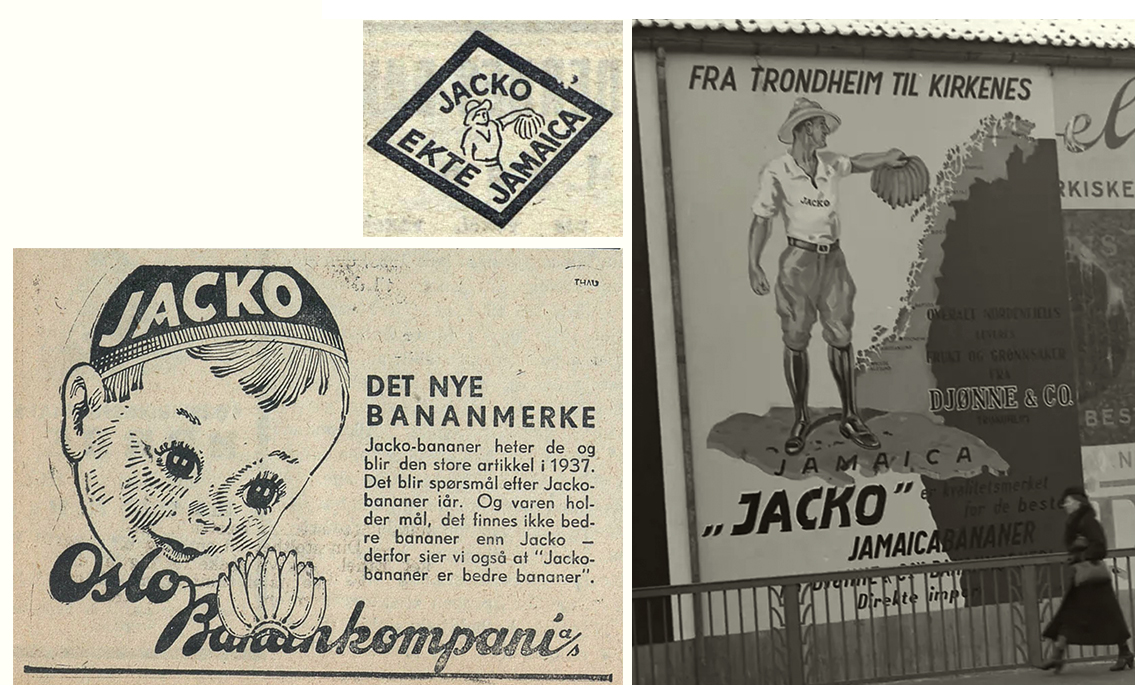
- once fyffes bananas appeared in the market, the term JACKO was applied to Jamaica Bananas by distributors, this lead to the quality mark that I share here in an image JACKO EKTE JAMAICA (Jacko is a term for a pet monkey, used in norway too in cartoons, etc… ekte Jamaica means pure Jamaica) (I suppose it was added to the bananas with a label) this image is from a newspaper from 1931 stating that it was the quality brand for bananas from jamaica.
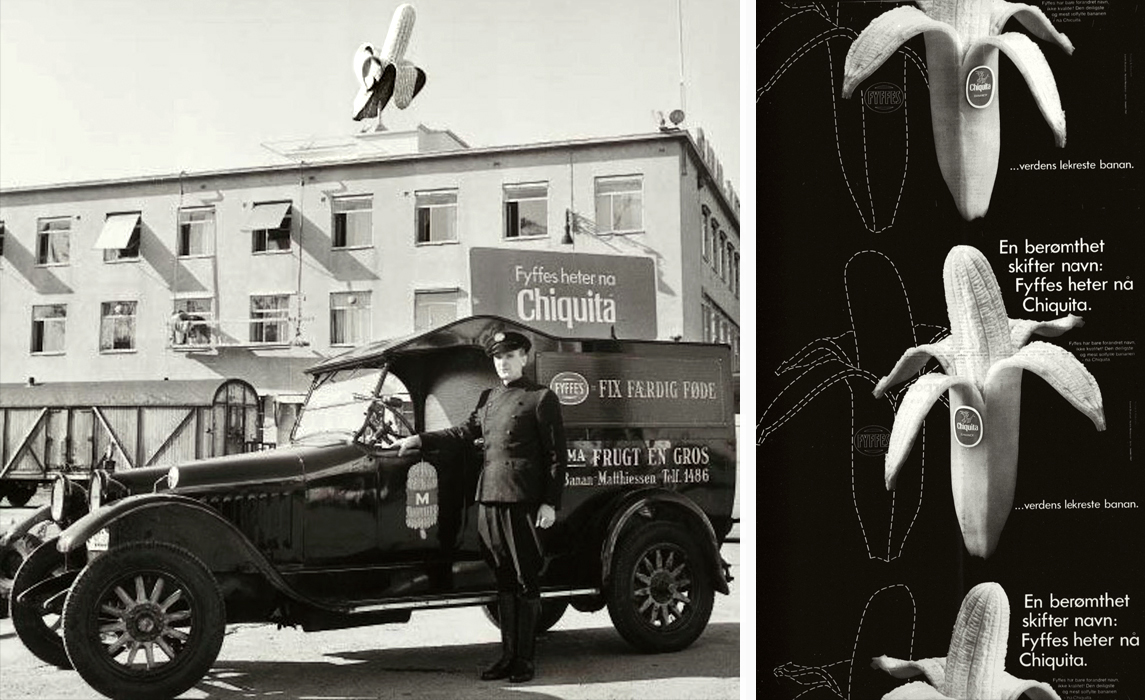
- an adversiment from 1967 when Fyffes changed to Chiquita in Norway , and a promotional car about the change, but still with FYFFES label on it .
- Then in 1937 the name Jacko was registered as a trade mark by Oslo Banankompani A/S. Its mascot was used in labels for bananas too, its illustration was made by Christer Halle.
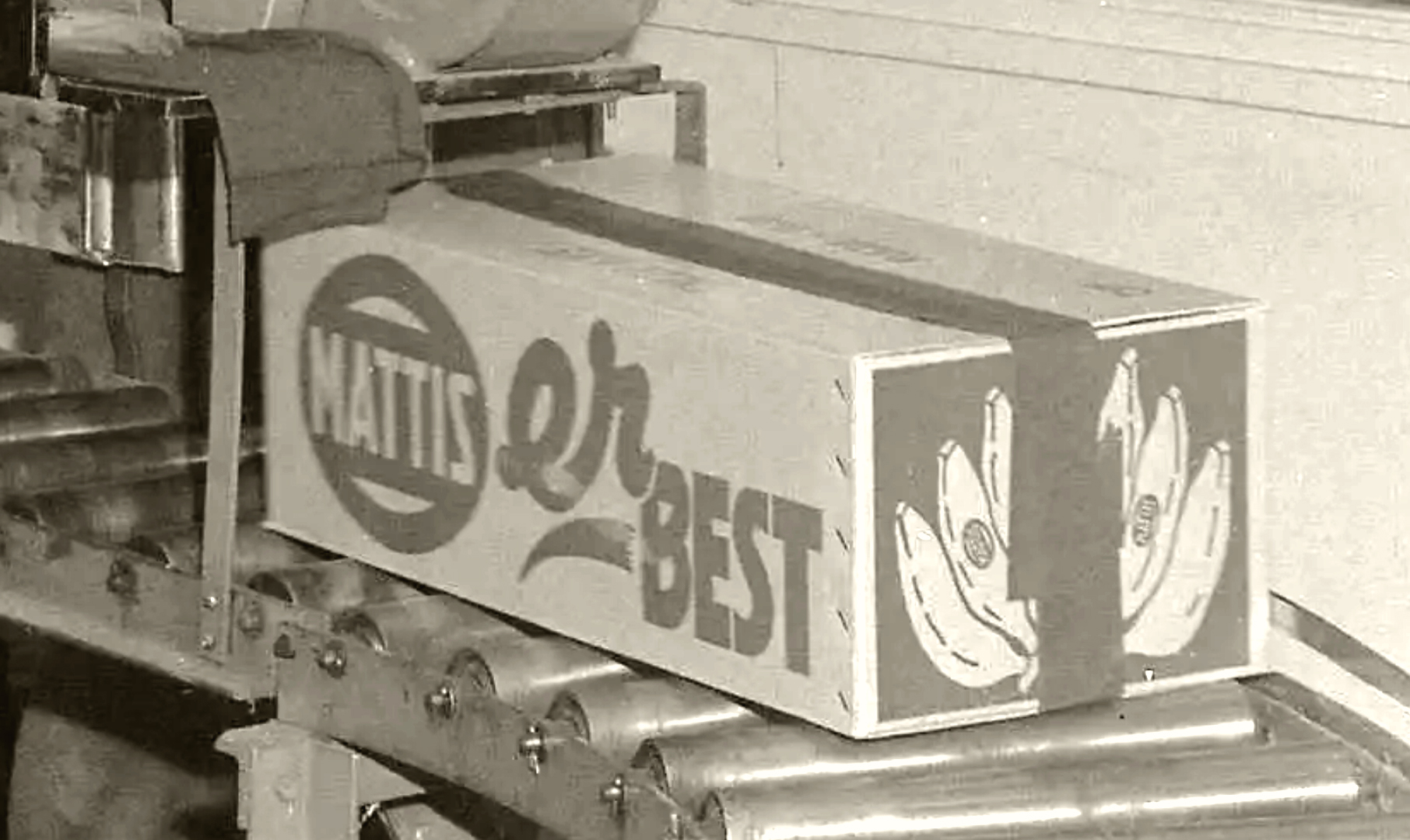
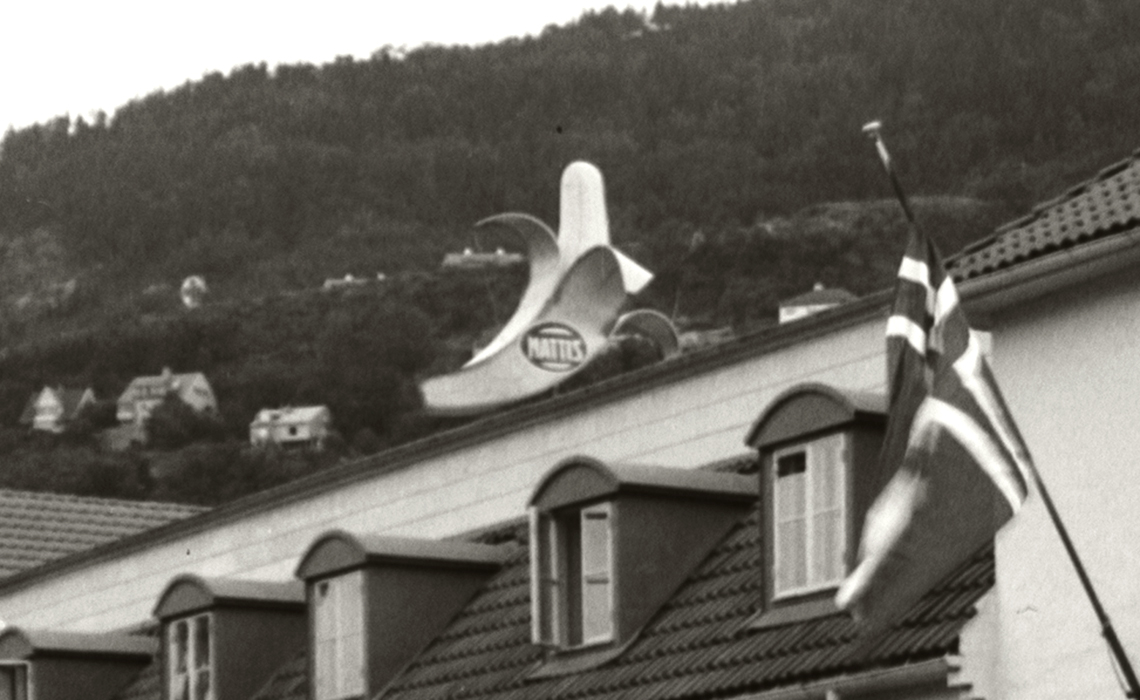
- In Norway there was also the label MATTIS in late 50s, which I am researching about, with same design as FYFFES. (Sculpture with Mattis label from 1960s. In Bergen facilities, box from Oslo facilities 01.06.1956) . Similar banana boxes from 1953 (in Trondheim) show the label Fyffes. No idea.
- image: roll of FYFFES labels (ca 1964 Trondheim: https://ntnu.tind.io/record/331265?ln=no&v=uv#?xywh=-4850%2C-1513%2C1510...
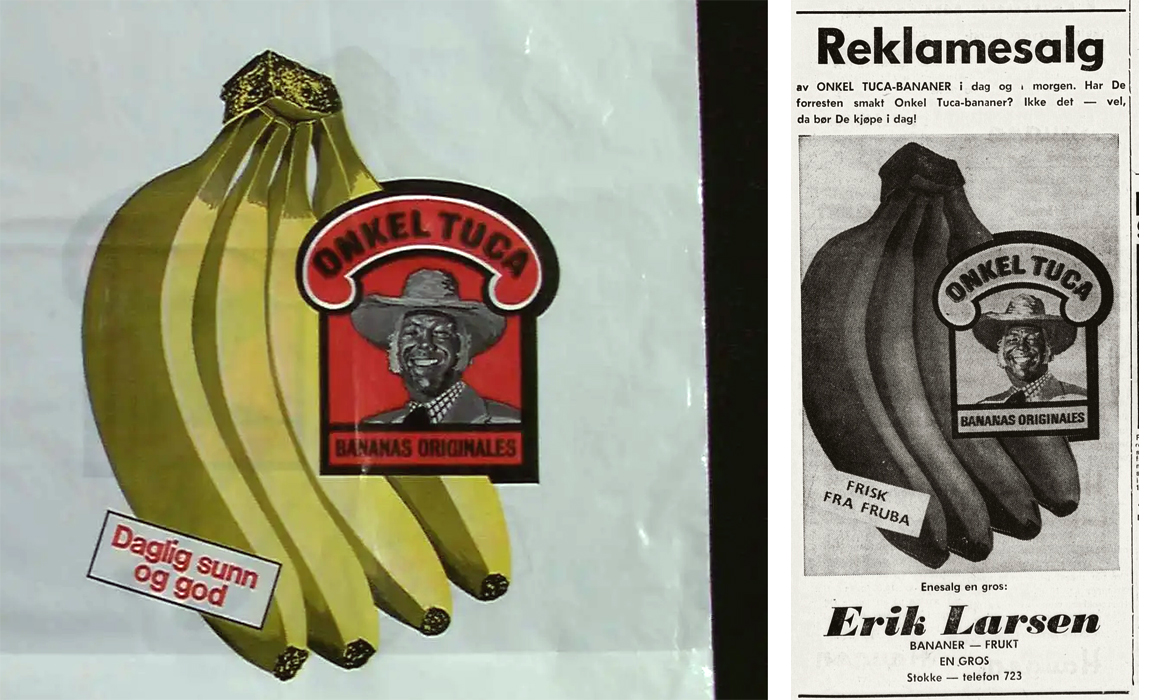
- Image of one of the first advertisements for Onkel Tuca in Norway with an image, showing a label with the Uncle profile flipped (mirrored) compared to all the logos I’ve seen from around that time. By the way, the name seems like a reference to “Uncle Sam,” especially since bananas—when the brand started—were being imported from Latin America rather than Africa.
- Image also show a plastic bag with same label in colour.
Extra ball :
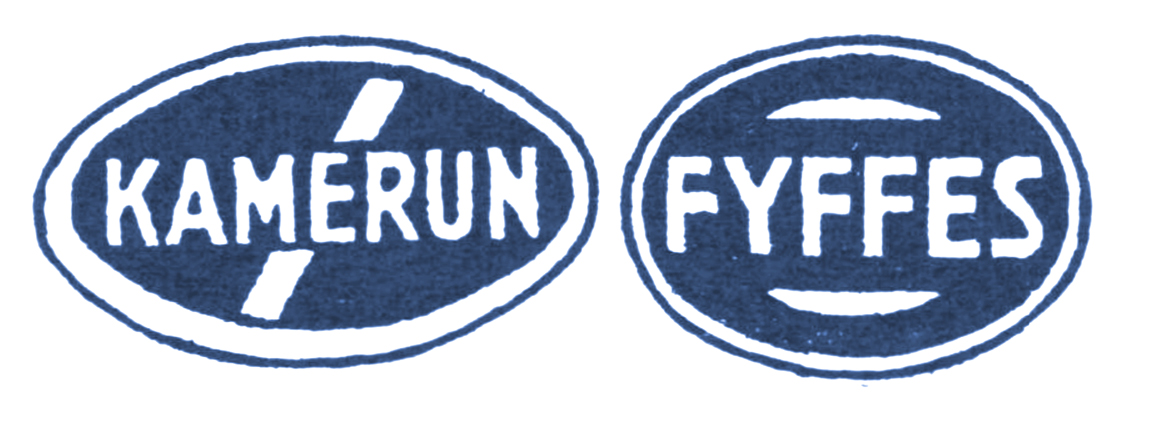
• In 1932, a company from Aarhus in Denmark made a blue oval label with the text KAMERUN on it. As both colour and shape were the same as the one of Fyffes (1929) this company sued the first and won the case in the supreme court of Danmark. (Source: Bergens Tidende: https://www.nb.no/items/876f598a115766ef1d5c4ab83bb9b7d9?page=3)
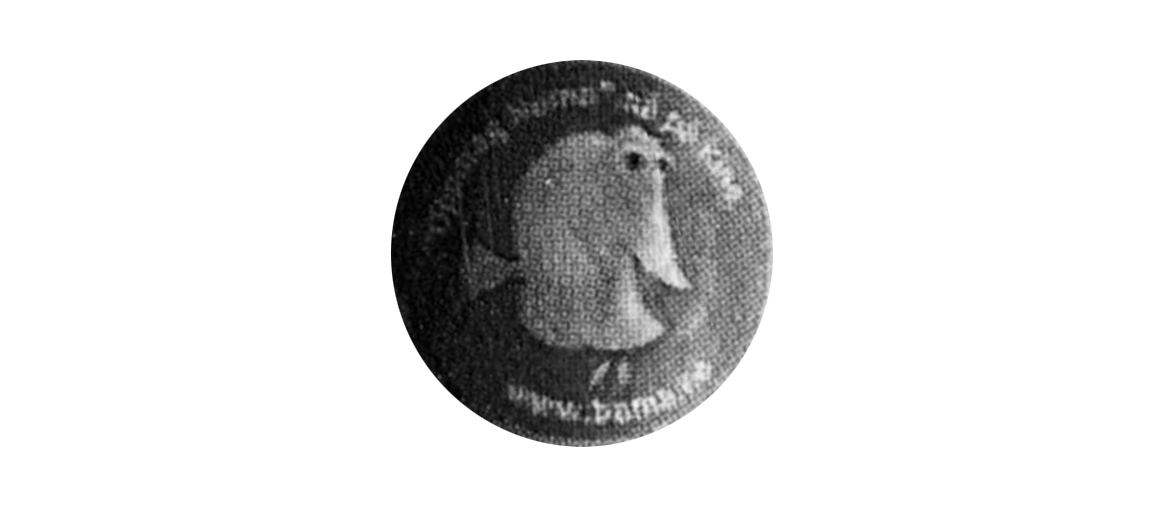
•In 2003, BAMA arranged for 10 million Dole bananas to serve as advertising space for placing labels promoting the movie Finding Nemo.
Text: "Oppdrag Nemo" nå på kino. www.bama.no
       Norway |
Comments
Great article.
Great article. Congratulations, Piero.
thanks Piero
thanks Piero